
On Returning.
A few notes on the long way back.

I have a team. An army of brilliant women I work with to keep track of my mental and physical health. Lately the separate conversations have all started circling in on one key topic.
Coming back to myself. A return, of sorts. To the person I’ve always truly been. As if I’d just popped out briefly (or for decades) and left a note on the door.
I think this is quite a universal feeling. That somewhere along the way, we got a little lost. Pushed off a true path by the idea that there’s a better, sleeker, more evolved version of ourselves lying in wait somewhere.
Driven by the belief that “when I finish that thing, when I get that job, when I hit that goal weight - then I’ll be that version of me.” It’s easily done, getting stuck in a loop believing there’s a director’s cut of us, perfectly edited to ensure our resting face finally looks all Parisian and chic and full of mystery.
Looking at it with a bit of distance, it seems genuinely, comically absurd. That person doesn’t exist. The version we keep trying to upgrade into is just the current us, with more ambient stress about being that said current version.
It’s like the frog in the pot of slowly boiling water. For a long time, my body was sending me messages the way you might text a friend you’re worried about.
“Hey, just checking in. You okay?”
Then a bit more urgently. Then, eventually, an all-caps 3am message that couldn’t be ignored. In my case, I had been essentially wearing earplugs. Not out of malice, just out of the deeply conditioned belief that the body’s job was to keep up and not complain about it.
I’m trying, really hard now, to listen earlier in the conversation. To catch the polite text before it becomes the screaming. Pain; of the physical or emotional variety, of the I-don’t-want-to-go-to-that-thing variety, is always a signal. It’s information, dressed up in discomfort because it had no other way to get through.
A very strange part of returning is realising how much of your personality was just stress.
That’s the one I’m still sitting with. Because it turns out the hyper-responsibility was just stress. The over-explaining, the compulsive productivity, the guilt that arrived like a little alarm - all stress. Stress wearing my clothes and speaking in my voice and being mistaken, by me and by most around me, for personality.
Stress that I now have no choice but to view the same way I would a pack of cigarettes. Something I may have idolised as chic and a marker of sophistication at a younger age, but now I know it’s just poison.
Things I cared a lot about:
Being busy. Being seen. Being impressive. Keeping up. Constantly achieving. Being the kind of person who had it handled, for everyone, all of the time.
Things I care about now:
Feeling calm. Sleep. Listening to my body. Living in a way that actually feels like mine.
The transition between the two lists was not graceful. When you’ve been running on cortisol and obligation for years, calm doesn’t feel like relief at first. It feels like something is wrong. The quiet has this unsettling quality, like when a noise you’ve ignored suddenly stops and you realise it had been there the whole time.
I still like to work; I still love a big and complex challenge. That doesn’t change. But there is a kind of wisdom, I think, that only comes back when you stop moving at the speed of your own fear.
Slowness; a walk, a book, an afternoon with nowhere pressing to be, lets things come back into focus. The response becomes gentler. The anger loses some of its grip.
Children know this. Small children are absolutely insufferable geniuses about their own needs. They know when they’re hungry, tired, overstimulated, in need of a nap or an absurd amount of physical affection.
By adulthood most of us have completely lost that thread. We eat when we can. We sleep when there are no more excuses not to. We push through what our body is clearly labelling as “Hey! We’re done for today, actually!” and then wonder why everything feels like wading through cement.
Most people find it much easier to be patient with literally everyone around them than with themselves. We extend enormous grace to friends, strangers, colleagues and then turn around and speak to our own nervous systems like a disappointed middle manager.
It is a genuinely strange way to live, once you notice it. And hard habit to break.
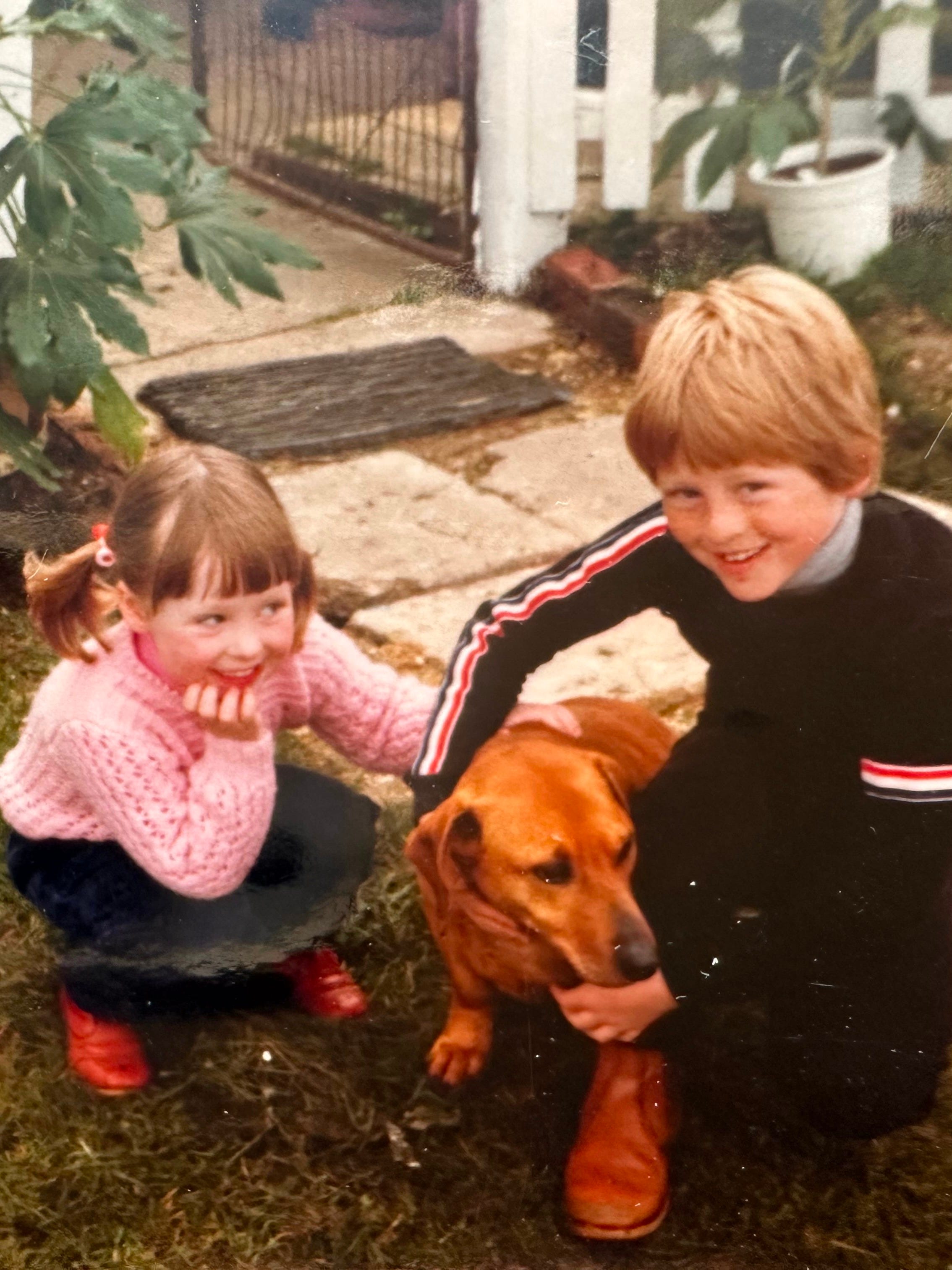
Just working my way back to this version of me.
(I don’t know whose pet this was, not ours, but I’ll still stop traffic to pat a stranger’s dog)
When stress starts to feel like identity
This is part of what can make returning feel more complicated than people expect. It is not always simply about feeling “better.”
Sometimes it is also about noticing how many everyday habits were built around staying safe, staying useful, staying ahead, or staying in control. And that can be a quietly disorienting thing to sit with.
My army of incredible women tell me that this can look like being the responsible one, all the time. Or, needing to be absurdly productive to feel ok, or even worthy. For others, it could be feeling guilty for resting or uneasy when nothing urgent is happening.
None of that means those qualities are fake. It just means stress may have been shaping them more than we ever realised.
And when that begins to soften, it can leave us wondering who we are without all that tension holding things in place.
This is uncomfortable. Very uncomfortable. And also, exactly where things start to get interesting.
―
I want to say something about perfectionism, with love. (Which is the phrase I now deploy before anything I mean very seriously.)
Perfectionism was not something we developed because we have high standards.
I know it feels that way. I know it has been repackaged for us (and possibly by ourselves) as a professional asset and proof that you care enough.
But perfectionism was installed.
Remember that time Apple thought it was a great idea to install U2’s new album onto every iPhone in the world without asking us? (Consent, Bono!) Perfectionism has been installed in us like that.
By systems, by early environments, by the repeated message that a mistake meant something permanent and damning about who you fundamentally are.
It is not a personality trait. It is a wound. And it is absolutely not helping us, or the world, now.
What we desire (perfection or otherwise) can’t really be untangled from what we’ve been through or what we’re still afraid of. I realise that’s not a neat conclusion. It’s more like a thing you have to keep holding up to the light and looking at from different angles until you can finally see the shape of it clearly.
―
So here I am, returning. To the kid who didn’t yet know she was supposed to be anything other than what she was. To the body that has been patiently, infuriatingly right about nearly everything. To the quiet, which is getting a little more familiar now. It is still strange sometimes, but in the way a new home is strange, rather than the wrong one.
Calm doesn’t always feel natural at first. But sometimes it is the first sign that the deeper, truer part of us has finally started to trust itself again.
And I’m choosing, slowly, to trust it back.
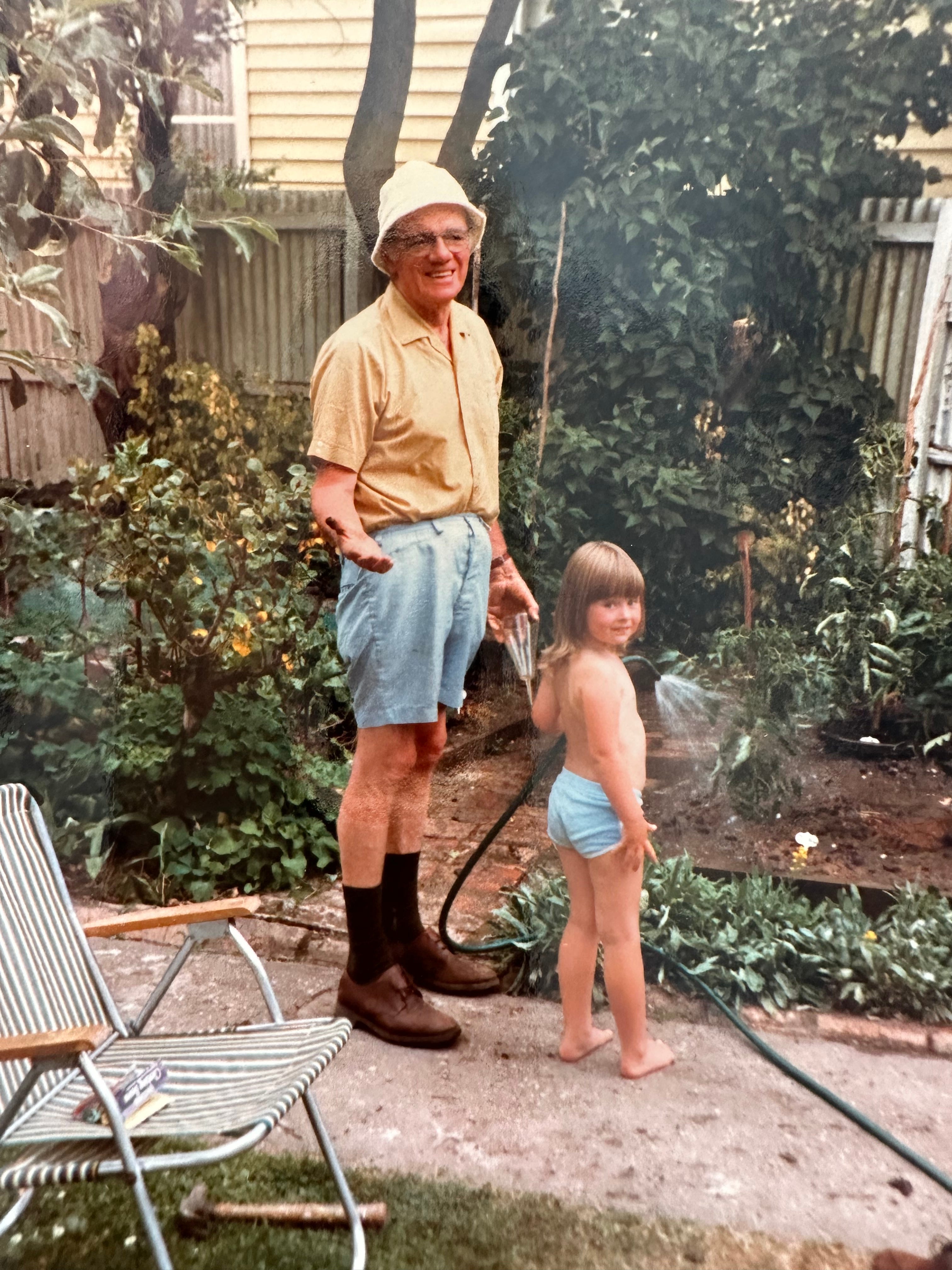
Helping my grandfather water his precious carrots on a hot afternoon.
I now own a very similar pair of shorts!
So lovely, Aims! 🥰🙌🏻